
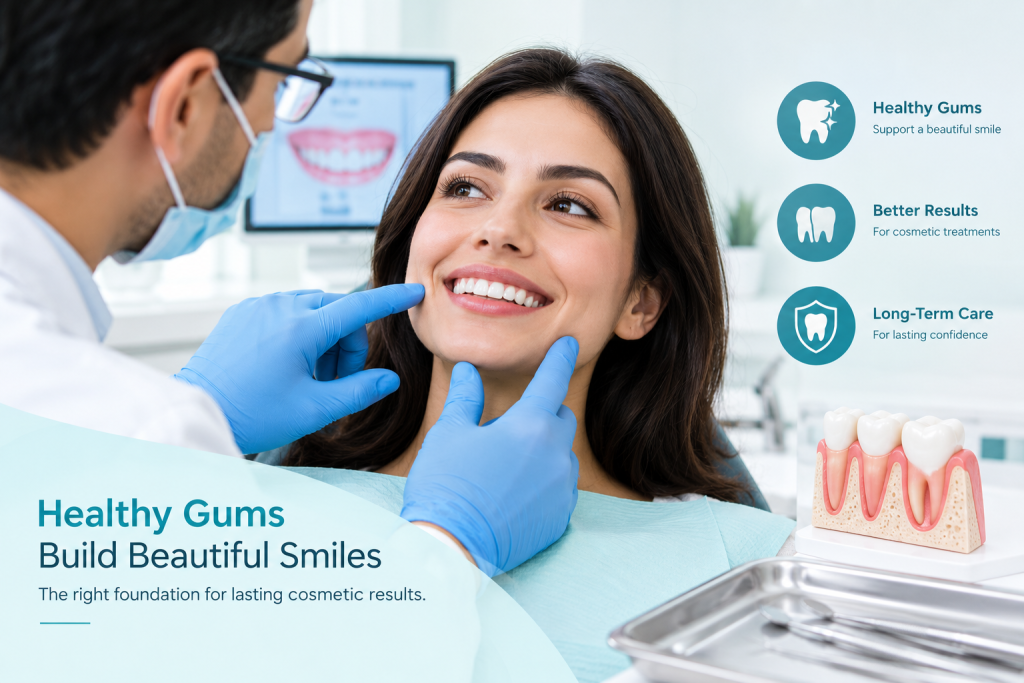
When people consider improving their smiles, they often focus on tooth colour, alignment, shape, and symmetry. However, the appearance of a beautiful smile depends on more than the teeth alone. Healthy gums provide an important foundation for cosmetic dental treatments, influencing both the appearance of the final result and the long-term care a smile may require.
For patients exploring cosmetic dentistry in Kuwait, understanding the relationship between gum health and dental aesthetics is an important step before choosing a treatment. Whether someone is considering veneers, professional teeth whitening, composite bonding, or gum contouring, a comprehensive dental assessment can help identify concerns that should be addressed before cosmetic treatment begins.
At Dentesto, Dr. Ali Al-Muhanna emphasizes personalized dental care, precision, and the natural appearance of each smile. Understanding the condition of the gums alongside the teeth helps patients make informed decisions about their treatment options.
1. Why Gum Health Is Essential for an Attractive Smile
The gums frame the teeth and contribute to the overall balance of a smile. Their colour, contour, and relationship with the teeth can influence how a person’s smile appears.
Healthy gums are generally firm and do not bleed easily during normal brushing or flossing. Persistent redness, swelling, tenderness, or bleeding may indicate inflammation and should be assessed by a dental professional.
Gum health also matters because the tissues surrounding the teeth help support them. Cosmetic procedures that improve tooth appearance cannot replace the need to maintain healthy gums and supporting structures.
Before recommending an aesthetic treatment, a dentist may evaluate the gum line, check for signs of inflammation, review oral hygiene practices, and assess the condition of the teeth and surrounding tissues.
This assessment helps establish whether cosmetic treatment can proceed appropriately or whether preliminary dental care is needed.
2. How Gum Problems Can Affect Cosmetic Dental Results
Gum problems do not always cause obvious discomfort. Some people notice bleeding during brushing, while others may have few symptoms despite developing gum inflammation.
Several conditions may affect the planning of cosmetic dentistry.
Gum inflammation
Gingivitis is inflammation of the gums that can cause redness, swelling, and bleeding. It is commonly associated with plaque accumulation. Professional evaluation and appropriate oral hygiene measures can help manage this condition.
Addressing inflammation before elective cosmetic treatment may help establish healthier tissues and make it easier to evaluate the natural gum line.
Gum recession
Gum recession occurs when the gum tissue moves away from its previous position, exposing more of the tooth or its root surface. It may be associated with periodontal disease, brushing habits, tooth position, or other factors.
Recession can affect the visual proportions of teeth and may contribute to sensitivity. If a patient is considering veneers or other cosmetic procedures, the dentist should assess the cause and extent of the recession before determining the appropriate treatment.
Uneven gum contours
Some people naturally have an uneven gum line, while others develop changes related to gum health or tooth position. This can make certain teeth appear longer or create an asymmetrical appearance when smiling.
In selected cases, gum contouring may be considered to improve the appearance of the gum line. However, the underlying cause must first be evaluated to determine whether the procedure is appropriate.
3. Why a Dental Assessment Should Come Before Veneers
Dental veneers are designed to improve the appearance of teeth by changing characteristics such as colour, shape, and proportions. Although veneers can address several aesthetic concerns, healthy supporting tissues remain important.
Before treatment, a dentist may examine the gums, assess the bite, evaluate existing restorations, and check for signs of tooth decay or other dental problems.
If active gum disease is present, it generally needs appropriate management before elective veneer treatment proceeds. This allows the dentist to evaluate the teeth and gum margins under more stable conditions.
Gum recession can also affect how veneer margins appear over time. Changes in gum position may expose areas around a restoration, potentially affecting its appearance and maintenance requirements.
Patients interested in veneers should discuss their gum health, treatment expectations, and long-term maintenance with their dentist.
Explore the range of options on the Dentesto cosmetic dentistry services page to learn about available aesthetic treatments.
4. The Relationship Between Gum Health and Teeth Whitening
Professional teeth whitening focuses on changing the colour of natural teeth. It does not treat gum disease, restore lost gum tissue, or change the colour of existing crowns, veneers, or fillings.
Healthy gums are important when planning whitening because whitening products can irritate soft tissues if used incorrectly or allowed to remain in contact with the gums.
Before treatment, a dental professional can assess the cause of tooth discolouration, check oral health, and determine whether whitening is suitable. Existing sensitivity, cavities, or gum inflammation may need attention first.
Patients should also understand that whitening results vary according to the type of staining, the whitening method, and individual circumstances.
For more information, visit Dentesto’s page about professional teeth whitening in Kuwait.
5. Can Gum Contouring Improve the Appearance of a Smile?
Gum contouring is a procedure intended to change the shape or position of the visible gum line in selected patients. It may be considered when excess gum tissue or an uneven contour affects the appearance of the teeth.
For example, a person may feel that their teeth appear short because a larger amount of gum tissue is visible when smiling. In other situations, differences in gum levels can make the smile appear asymmetrical.
However, not every uneven gum line requires treatment. The appearance may be influenced by tooth position, the natural anatomy of the gums, inflammation, or other factors.
A dental examination helps determine the cause of the concern and whether gum contouring, orthodontic treatment, restorative dentistry, or another approach is more suitable.
The dentist should also evaluate the supporting tissues and explain the potential benefits, limitations, recovery considerations, and maintenance requirements before treatment.
The goal is not simply to create a uniform gum line. It is to achieve a balanced appearance while preserving healthy tissues.
6. The Importance of Gum Health for Composite Bonding
Composite bonding uses tooth-coloured resin to improve the appearance of selected teeth. It may be used to repair small chips, address minor shape irregularities, or improve the appearance of certain gaps.
Because bonding involves carefully shaping material around the tooth, the condition of the surrounding gum tissue matters during treatment planning.
Inflamed or bleeding gums can make the working area more difficult to manage and may interfere with the dentist’s ability to achieve a clean, controlled result.
Where necessary, preliminary care can help improve gum health before bonding is performed. After treatment, good oral hygiene and regular dental reviews help maintain the surrounding tissues and the restoration.
Composite bonding does not prevent future gum disease. Patients still need to brush carefully, clean between their teeth, and attend recommended dental appointments.
7. Everyday Habits That Help Protect Your Gums
Maintaining gum health is an ongoing process. Daily habits can help reduce plaque accumulation and support the tissues surrounding the teeth.
Brush gently and consistently
Brush twice daily with fluoride toothpaste and a soft-bristled toothbrush. Use gentle pressure along the gum line rather than scrubbing aggressively, as excessive force may contribute to gum irritation or recession.
Clean between your teeth
A toothbrush cannot effectively clean every surface between the teeth. Dental floss or appropriately sized interdental brushes can help remove plaque from these areas.
Choose a method that suits your teeth and ask your dental professional for guidance if you are unsure how to use it correctly.
Pay attention to bleeding
Gums that bleed repeatedly during brushing or cleaning between the teeth should not be ignored. Although bleeding can have different causes, persistent symptoms warrant a dental assessment.
Maintain regular dental visits
Professional examinations can help identify early signs of gum inflammation, recession, and other problems that may not be easy to recognize at home.
Your dentist can recommend an appropriate review schedule based on your oral health, treatment history, and individual risk factors.
Avoid smoking
Smoking increases the risk of gum disease and can affect the body’s response to periodontal treatment. Avoiding tobacco is an important step in protecting long-term oral health.
8. Planning Cosmetic Dentistry Around Your Individual Needs
There is no single cosmetic treatment that suits everyone. The right approach depends on the condition of the teeth and gums, the patient’s goals, and the clinical findings.
A comprehensive consultation may include:
- Discussing the patient’s concerns and desired changes.
- Examining the teeth, gums, and supporting tissues.
- Assessing the bite and existing dental restorations.
- Identifying dental conditions that may need treatment first.
- Explaining suitable cosmetic options and their limitations.
- Establishing a maintenance plan for long-term oral health.
Some patients may benefit from a relatively simple treatment, while others may require several stages of care. Treatment planning should be individualized rather than based solely on a preferred cosmetic result.
At Dentesto, Dr. Ali Al-Muhanna’s approach emphasizes simplicity, precision, and personalized smile enhancement. A consultation provides an opportunity to discuss concerns and understand which options may be suitable.
9. What to Expect During a Consultation at Dentesto
If you are considering cosmetic dentistry in Kuwait, your first consultation is an opportunity to discuss your goals and understand the condition of your oral health.
You can explain what you would like to change, whether your concerns involve tooth colour, gum visibility, uneven edges, or the overall balance of your smile.
The dentist can then evaluate your teeth and gums, discuss possible treatment options, and explain whether any preliminary care is recommended.
It is important to remember that cosmetic dentistry should complement oral health rather than replace it. Healthy gums, appropriate treatment selection, and consistent maintenance all contribute to a more predictable approach to smile enhancement.
To learn more about available treatments or arrange a consultation, visit the Dentesto contact page.
Conclusion: A Healthy Foundation for a Confident Smile
A beautiful smile depends on the relationship between the teeth, gums, and surrounding oral structures. Although cosmetic treatments can improve tooth colour, shape, and proportions, healthy gum tissue remains an essential consideration when planning treatment.
Understanding the importance of gum health before veneers, whitening, composite bonding, or gum contouring helps patients make more informed decisions and recognize concerns that may need attention.
For anyone exploring cosmetic dentistry in Kuwait, a professional assessment is a sensible starting point. With individualized planning, appropriate treatment, and consistent oral hygiene, patients can work toward a smile that looks natural and supports their long-term oral health.
Discover personalized cosmetic dental care at Dentesto and discuss your smile goals with Dr. Ali Al-Muhanna.